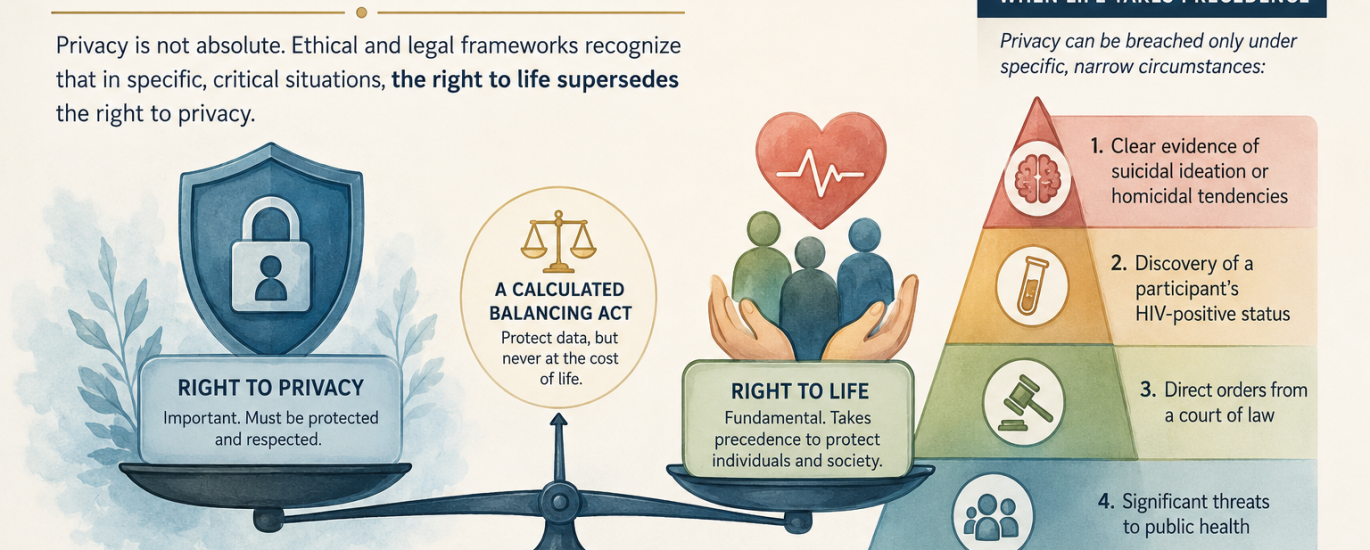
In many Western ethical frameworks, the right to privacy is treated as a near-sacrosanct barrier. However, Indian guidelines introduce a “Privacy Paradox” that establishes a clear legal and ethical hierarchy. According to Section 1.1.5, privacy is not an absolute right but a conditional one. The guidelines explicitly state that “the right to life of an individual supersedes the right to privacy.” This means a participant’s confidentiality can be legally and ethically breached under specific, narrow circumstances, such as: Clear evidence of suicidal ideation or homicidal tendencies. The discovery of a participant’s HIV-positive status. Direct orders from a court of law or significant threats to public health. This represents a calculated balancing act: while the researcher must safeguard data, they cannot allow the “right to secrecy” to become a death sentence for the individual or the community.
About the Author